Passing Circuit for Ball Control
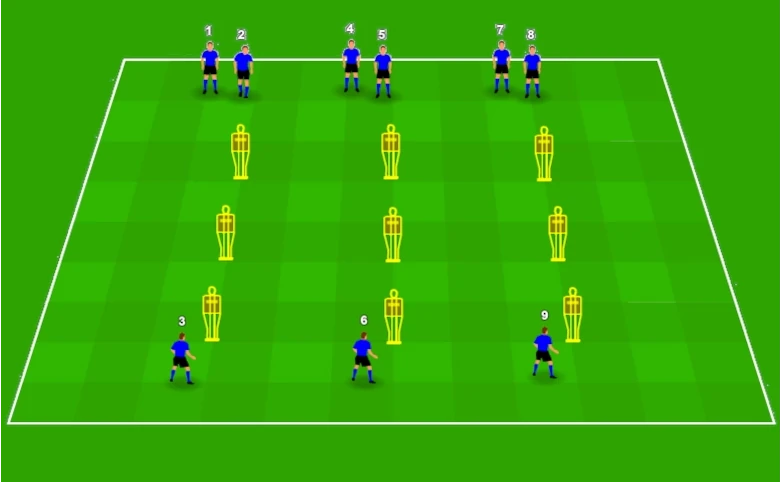
This Passing Circuit helps adult amateur teams improve passing accuracy, first touch, ball control at speed, and movement between stations. It works well when you want a technical exercise that keeps players active while reinforcing timing, communication, and clean rotations.
Setup
Set up the Passing Circuit across three vertical zones. Each zone should have three mannequins staggered through the working area.
Use a minimum of nine players to keep the circuit flowing. Each zone starts with two players on one side and one player waiting on the opposite side.
The mannequins act as obstacles that players must move around or play through. The circuit links the three zones together, so each completed action feeds the next part of the exercise.
Equipment Needed
- 9 mannequins or cones
- 3 balls
Rules & Instructions
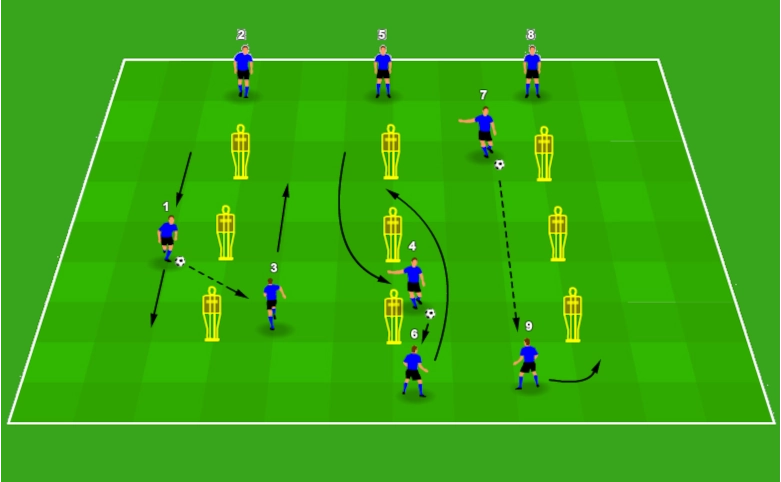
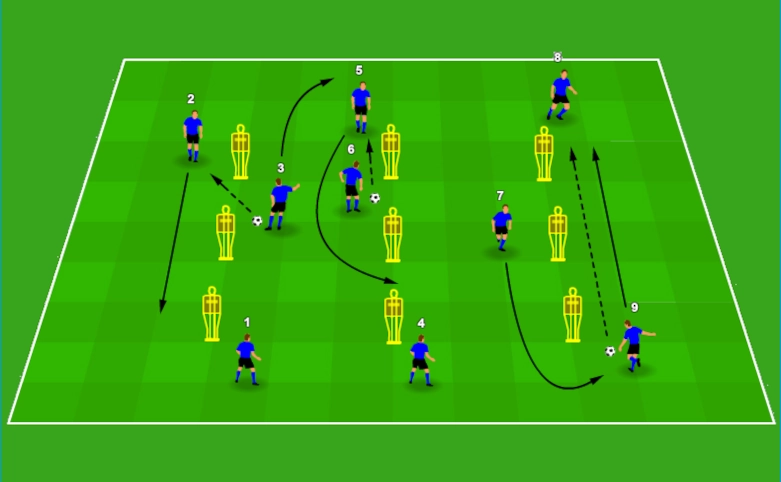
The steps in each zone happen at the same time, creating one continuous passing circuit. Use the pictures below as a reference, following the actions from top to bottom and left to right. The video shows a similar exercise and can help players understand the flow before starting.
Zone 1
- Player 1 starts by running with the ball toward the last mannequin in Zone 1.
- Player 1 passes between the 2nd and 3rd mannequins to Player 3, who is waiting on the opposite side of the zone.
- Player 3 receives the ball and runs toward the first mannequin in the zone.
- Player 3 passes between the 1st and 2nd mannequins to Player 2, who is waiting at the starting position.
- Player 3 then runs to the beginning of Zone 2, the middle row of mannequins.
- Players 1 and 2 repeat the same sequence.
Zone 2
- Player 4 starts by running with the ball toward the last mannequin in Zone 2.
- Player 4 runs diagonally between the 2nd and 3rd mannequins toward Player 6, who is waiting on the opposite side.
- Player 4 passes to Player 6 immediately after running through the mannequins.
- Player 6 receives the ball and runs toward the first mannequin in the zone.
- Player 6 runs diagonally between the 1st and 2nd mannequins toward Player 5, who is waiting at the beginning of the zone.
- Player 6 passes to Player 5 immediately after running through the mannequins.
- Player 6 then runs to the beginning of Zone 3, the right-hand row of mannequins.
- Players 4 and 5 repeat the same sequence.
Zone 3
- Player 7 starts by playing a long pass to Player 9 on the other side of Zone 3.
- Player 7 runs toward the end of the zone.
- Player 9 receives the ball and shifts to the right side of the mannequins.
- Player 9 plays a long pass to Player 8, who is waiting at the starting position.
- Player 9 runs to the beginning of the zone, then continues to the starting position in Zone 1 to restart the circuit.
- Players 7 and 8 repeat the same sequence.
Players rotate positions after completing each sequence to ensure equal participation and adaptability. Repeat the circuit at least five times at pace.
The first time this exercise is run, players may collide or disrupt the flow. Start slowly, focusing on coordination and accuracy, then gradually increase the speed as players become more comfortable.
Encourage players to communicate by calling for the ball and maintaining a steady rhythm.
Coaching Tips
- Start at a slower pace until players understand the movement pattern.
- Demand accurate passes into the receiving player’s path.
- Encourage players to call for the ball before receiving.
- Check that players sprint to the next station after passing.
- Reinforce a clean first touch before the next action.
- Increase the speed once the circuit runs smoothly.
Why It Works for Adult Amateur Teams
This passing cirtcuit gives adult amateur players a repeatable way to practise passing, first touch, long passing, ball control at speed, and movement after releasing the ball. Because the zones work together, players must stay alert and prepare early for their next action.
It also builds rhythm and communication across the group. The rotations help players experience different passing distances, receiving angles, and movement patterns without needing a complex tactical setup.
- Sharper passing accuracy
- Cleaner first touch under movement
- Better ball control at speed
- Improved communication and timing
- Stronger coordination between teammates
Related Posts
Back Four Exit - Defenders vs Midfield and Attack
A Back Four Exit drill for adult amateur teams, training build-up play, pressing, switching play, transitions, and finishing in a zoned half-pitch setup.
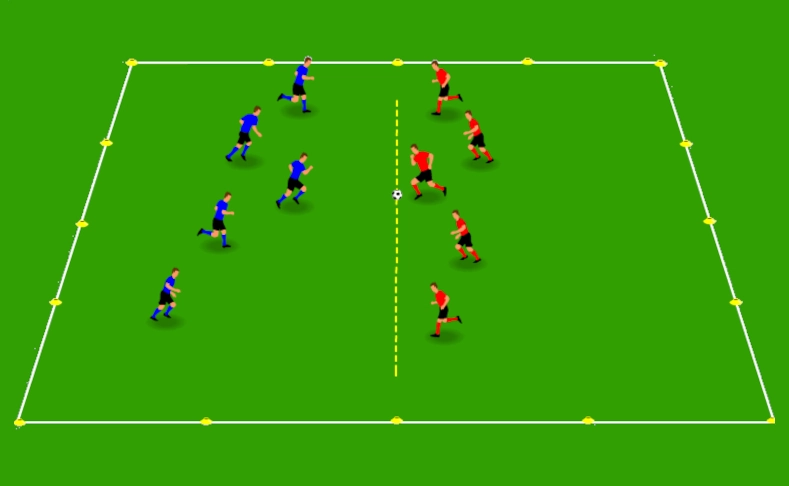
Spatial Awareness Drill: Football with Rugby Rules
Sharpen spacing, patience, and communication by playing football with rugby’s offside rule and a goal-line carry finish.
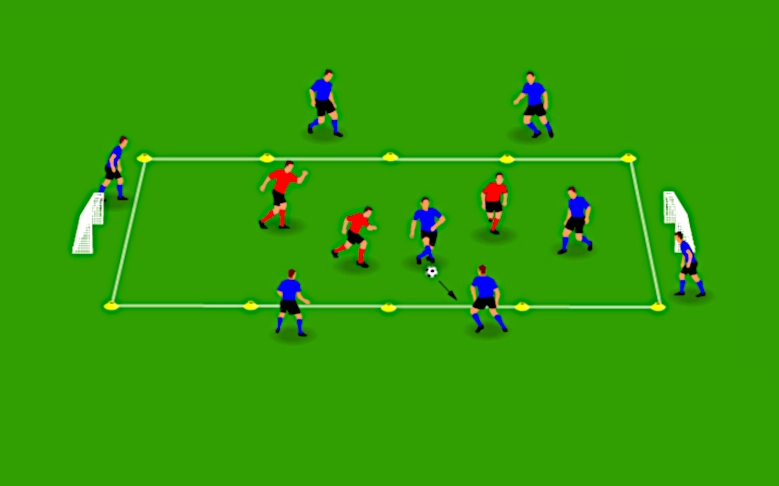
8v3 Ajax Football Rondo Drill with Mini Goals
Football rondo drill for adult amateurs: 8v3 Ajax game to sharpen passing, pressing, and decision-making with quick restarts.